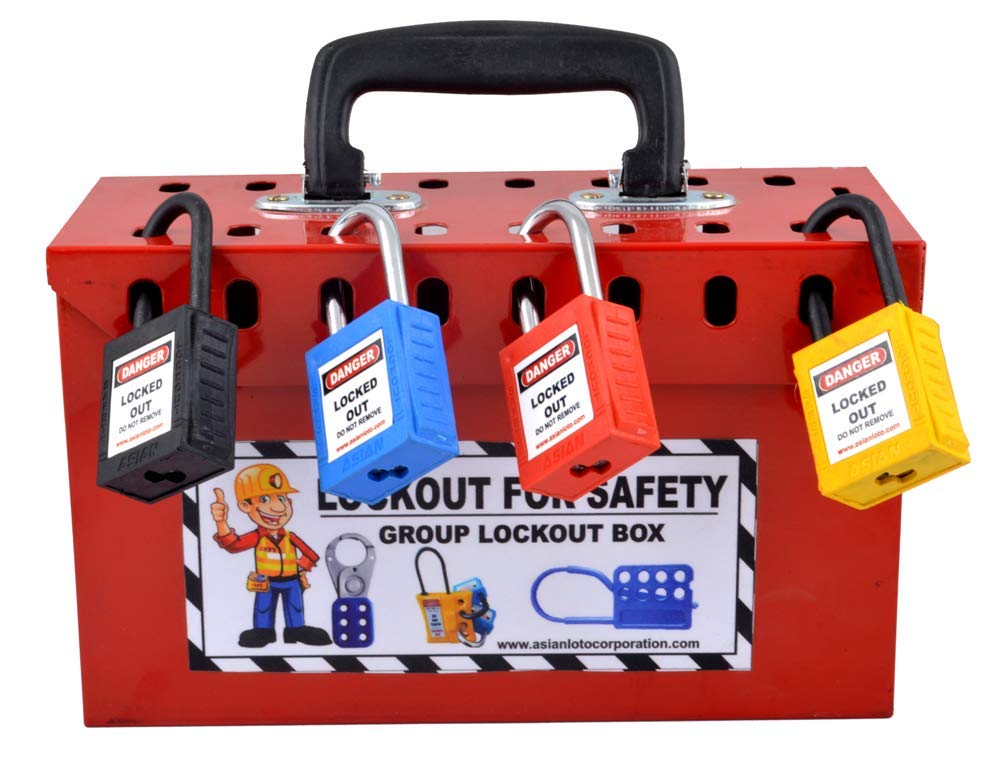
When multiple workers service the same machine, coordinating who controls the energy isolation becomes a critical safety challenge. A single missed lock can lead to catastrophic startup during maintenance. The lockout tagout group lock box isn’t just a storage container—it’s a centralized control point that prevents accidental energization when teams work in tandem.
In high-risk industrial environments, the group lock box eliminates confusion. Instead of relying on verbal agreements or scattered locks, it enforces a physical, verifiable procedure. This isn’t about compliance paperwork—it’s about creating a culture where safety is visible, tactile, and non-negotiable.
Why Group Lockout Scenarios Demand a Better System
Traditional lockout tagout (LOTO) works when one person isolates energy and applies their lock. But in group maintenance—say, a conveyor system requiring electrical, mechanical, and hydraulic repairs—multiple technicians must engage the same energy source. Without coordination, someone might remove their lock prematurely, unaware others are still working.
This is where solo LOTO fails. OSHA 1910.147 specifically mandates that group lockout procedures must include a primary authorized employee who coordinates the control of energy. That’s the role the group lock box fills: it holds the master energy-isolating device (like a breaker switch or valve lock) until every worker removes their personal lock.
Real-world example: At a Midwest packaging plant, a maintenance team was repairing a shrink-wrap machine. Two electricians and a mechanical technician were involved. Without a group lock box, the first electrician completed their task, removed their lock, and re-energized the circuit—unaware the mechanical tech was still replacing a drive belt. The machine started, causing severe injury.
After implementing a group lock box system, the same facility saw zero LOTO-related incidents over the next three years.
How a Lockout Tagout Group Lock Box Works
The process follows a strict sequence:
- Primary authorized employee (PAE) identifies all energy sources and applies locks.
- The energy-isolating device (e.g., circuit breaker lock) is placed inside the group lock box.
- Each worker applies their personal lock to the box.
- The machine remains de-energized until all individual locks are removed.
- Only then can the PAE retrieve the lockout device and restore power.
This system transforms group work from a coordination risk into a procedural certainty.
Key Components of a Typical Group Lock Box
- Durable outer casing (usually metal or heavy-duty plastic)
- Multiple lockout points (shackles or hasps for 6–12+ locks)
- Clear labeling (warning tags, procedure steps, PAE identification)
- Weather resistance (for outdoor or washdown environments)
- Mounting options (wall brackets, portable stands)
The box itself doesn’t lock the energy source—it secures the device that does. This distinction is crucial. The group lock box acts as a temporary vault, ensuring no one can access the isolation mechanism until every worker is clear.
Common Mistakes That Undermine Group Lockout Safety
Even with a lock box in place, poor execution can create false confidence. These pitfalls are widespread:
- Using the box as a suggestion, not a rule – Workers skip locking if they’re “just checking” something.
- No designated PAE – Responsibility is assumed but not assigned, leading to handoff gaps.
- Shared locks or keys – Defeats the purpose of individual accountability.
- Poor placement – Box is stored out of sight, making it easy to bypass.
- Lack of training – New hires follow informal habits, not written procedures.
Workplace insight: One manufacturing site discovered that 40% of their LOTO violations occurred during shift changes. The solution? Mandate that the outgoing PAE brief the incoming PAE at the lock box—face-to-face, on the floor, with locks in hand.
When to Use a Group Lock Box vs. Individual Lockout
Not every job needs a group system. Misapplication leads to inefficiency or frustration.
| Scenario | Use Individual Lockout | Use Group Lock Box |
|---|---|---|
| One technician repairs a pump | ✅ | ❌ |
| Three workers service a production line | ❌ | ✅ |
| Short diagnostic check | ✅ | ❌ |
| Multi-discipline overhaul | ❌ | ✅ |
| Shift maintenance with handoff | ❌ | ✅ |
The rule of thumb: if more than one person will interact with the same energy source, even at different times, a group lock box is mandatory.
Top 5 Lockout Tagout Group Lock Boxes in 2024
Choosing the right box depends on environment, team size, and risk profile. Here are five industry-proven options:
- Grace Industries 6600 Series Group Lockout Box
- - Holds up to 13 locks
- - Corrosion-resistant steel
- - Integrated hasp and shackle
- - Ideal for heavy manufacturing
- Saf-T-Mate SM-GLB1 Multi-Person Lockout Station
- - 10-lock capacity
- - UV-resistant polycarbonate
- - Wall-mountable with anti-tamper screws
- - Best for outdoor or washdown areas
- Master Lock 1690DATDLAD Lockout Hasp & Box Kit
- - Includes hasp, padlocks, and tags
- - Durable aluminum construction
- - Affordable starter kit for small teams
- - Suited for facilities with limited LOTO needs
- Bernard LLC LOTO-GB6 Group Safety Box
- - 6-lock standard, expandable to 12
- - Clear window for lock visibility
- - Custom labeling options
- - Used in automotive and aerospace sectors
- Keylite KL-GB12 Industrial Lock Box
- - Stainless steel body
- - Weatherproof gasket seal
- - Fits large valve locks and circuit breaker devices
- - Preferred in oil, gas, and chemical plants
Pro tip: Pair your lock box with color-coded locks by trade (e.g., red for electricians, blue for mechanics). This visual system speeds up verification and reduces errors.
Integrating the Group Lock Box Into Your LOTO Program
A box on the wall won’t fix broken processes. It must be part of a documented, trained, and audited system.
Start with these steps:
- Update your written LOTO program to include group procedures and PAE roles.
- Train all authorized employees on the sequence, emphasizing that the box is the final gate.
- Conduct monthly audits—inspect lock boxes for damage, missing tags, or bypass signs.
- Include lock box checks in pre-job briefings—make it part of the routine.
- Use near-misses as learning tools—if someone tried to bypass the box, investigate why.

Case example: A food processing plant reduced LOTO deviations by 78% in six months by adding group lock box verification to their digital work permit system. Technicians scan a QR code on the box before starting work, logging participation automatically.
Limitations and Real-World Challenges
No tool is foolproof. Group lock boxes have constraints:
- They don’t work without discipline – Culture matters more than hardware.
- Large teams require expandable systems – Standard 6-lock boxes may need chaining.
- Remote sites face access issues – If the PAE isn’t on-site, power restoration stalls.
- Temporary contractors complicate ownership – Include them in lock assignment protocols.
The biggest limitation? Complacency. Workers may treat the box as routine, not ritual. That’s why regular drills—unannounced LOTO audits—keep the system sharp.
How to Audit Your Group Lock Box Effectiveness
An effective audit goes beyond “Is the box there?” Ask:
- Are all locks accounted for at shift end?
- Is the PAE clearly identified on the tag?
- Are locks personal and non-interchangeable?
- Is the box located near the energy source?
- Are tags current and legible?
Create a simple checklist:
| Item | Pass | Fail |
|---|---|---|
| Box is undamaged | ☐ | ☐ |
| All locks are personal | ☐ | ☐ |
| PAE tag is filled out | ☐ | ☐ |
| No duplicate keys present | ☐ | ☐ |
| Labels are visible and clean | ☐ | ☐ |
Run this quarterly. Fix failures within 48 hours.
The Bottom Line: Safety Is a Shared Lock, Not a Solo Act
A lockout tagout group lock box turns individual responsibility into collective accountability. It’s not about adding steps—it’s about removing risk. In environments where milliseconds matter, this box buys time, clarity, and control.
Install the right box. Train your team. Empower the PAE. And never let procedure bend to convenience.
Your team’s safety isn’t locked in a cabinet—it’s secured in a system that works, every time.
FAQs
What is a lockout tagout group lock box used for? It secures energy-isolating devices during multi-person maintenance, ensuring no one can re-energize equipment until all workers have completed their tasks.
Who controls the group lock box? A designated primary authorized employee (PAE) manages the box, applies the initial lockout, and restores energy only after all personal locks are removed.
Can temporary workers use the group lock box? Yes—contractors and temps must follow the same LOTO procedures and use their own personal locks.
How many locks can a group lock box hold? Most models support 6 to 12 locks, with expandable options for larger teams.
Is a group lock box required by OSHA? OSHA doesn’t mandate a physical box, but it does require a coordinated procedure for group lockout—using a lock box is the most effective way to comply.
What happens if a worker loses their lock? The lock must be removed only by the PAE following a formal verification process that confirms the worker is clear of the equipment.
Can the same lock be used on multiple boxes? No—each personal lock must be unique to the individual and used only by them to maintain accountability.
FAQ
What should you look for in How a Lockout Tagout Group Lock Box Saves Lives and Downtime? Focus on relevance, practical value, and how well the solution matches real user intent.
Is How a Lockout Tagout Group Lock Box Saves Lives and Downtime suitable for beginners? That depends on the workflow, but a clear step-by-step approach usually makes it easier to start.
How do you compare options around How a Lockout Tagout Group Lock Box Saves Lives and Downtime? Compare features, trust signals, limitations, pricing, and ease of implementation.
What mistakes should you avoid? Avoid generic choices, weak validation, and decisions based only on marketing claims.
What is the next best step? Shortlist the most relevant options, validate them quickly, and refine from real-world results.