A maintenance technician reaches into a jammed conveyor belt. The machine isn’t moving—so it’s safe, right? Not if someone unknowingly powers it back on. This exact scenario causes over 120 fatalities and nearly 50,000 injuries annually in the U.S. alone. At the heart of preventing these tragedies is one often-overlooked tool: lockout tagout signage.
These aren’t just stickers or placards. They are engineered communication devices that bridge the gap between procedure and awareness. When implemented correctly, lockout tagout (LOTO) signage transforms invisible hazards into visible warnings—shaping behavior, reinforcing protocols, and saving lives.
This isn’t about ticking compliance boxes. It’s about ensuring that when someone sees a tag, they understand it, respect it, and act on it.
Why Lockout Tagout Signage Is Non-Negotiable
OSHA’s standard 29 CFR 1910.147 mandates energy control procedures for servicing or maintaining machines. While locks and tags physically isolate energy sources, signage plays a different but equally critical role: communication.
Without clear signage: - Workers may bypass LOTO procedures due to confusion - Contractors or cross-functional teams remain unaware of active lockouts - Emergency responders lack visibility into hazardous zones
- Signage acts as both a legal safeguard and a behavioral nudge. It answers three immediate questions:
- Is this equipment under maintenance?
- Who is responsible?
- What energy sources are isolated?
In high-noise, fast-paced environments—like manufacturing plants or utility substations—a well-placed sign can be the difference between a routine repair and a life-altering injury.
Types of Lockout Tagout Signage and Where They Belong
Not all signs serve the same function. Each type has a specific purpose, placement, and design standard. Understanding these distinctions ensures maximum effectiveness.
1. Warning Signs (Red/Black/White) Used to signal immediate danger. These are OSHA-compliant and typically feature bold text like “DANGER – DO NOT OPERATE” or “LOCKOUT IN PROGRESS.” Best placed: On or directly adjacent to locked-out equipment, circuit breakers, or control panels.
2. Informational Instruction Signs (Blue/White)
These guide behavior rather than warn of immediate danger. Examples include “LOCKOUT PROCEDURE REQUIRED BEFORE MAINTENANCE” or “REPORT ANY DAMAGED TAGS.” Best placed: Near machine entrances, tool cribs, or central maintenance hubs.
3. Group Lockout Boards (Multi-Layered Panels) For complex systems involving multiple energy sources or crews, a centralized lockout board with signage provides visibility. These often include employee name tags, lock locations, and work descriptions. Best placed: In control rooms or near large machinery like boilers or production lines.
4. Lockout Station Signs
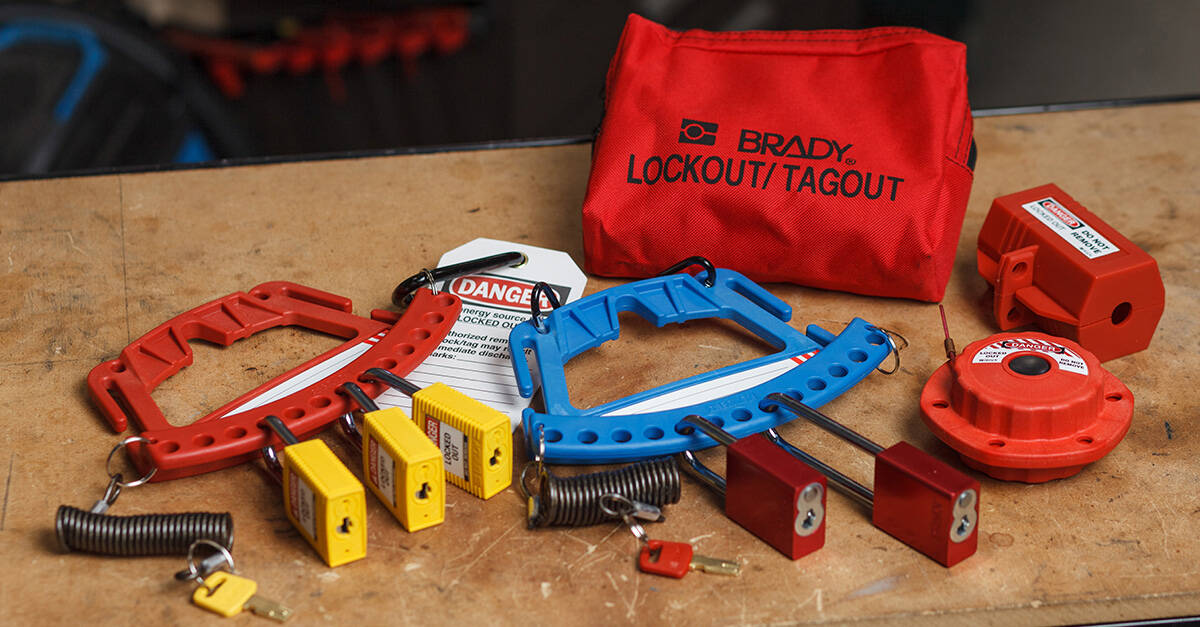
These identify the location of LOTO kits, hasps, locks, and tags. They reduce delays by directing personnel to tools quickly. Best placed: On walls near equipment zones or maintenance staging areas.
Design Principles That Make LOTO Signage Effective
A poorly designed sign might as well not exist.
Visibility and Legibility Use high-contrast colors: red for danger, yellow for caution, blue for mandatory actions. Text should be readable from at least 5 feet away. Sans-serif fonts (like Arial Bold) perform best under stress or low light.
Language and Clarity Avoid technical jargon. “Do not start—maintenance in progress” is clearer than “Energy isolation in effect.” Use pictograms where possible—a universal symbol for “no operation” improves comprehension across language barriers.
Durability Matters Paper tags fade. Vinyl or laminated signs resist moisture, grease, and UV exposure. In chemical plants or outdoor settings, consider aluminum or polycarbonate signage with chemical-resistant inks.
Standardization Across Sites A plant in Ohio should use the same sign language as one in Texas. Consistency reduces cognitive load. ISO 7010 and ANSI Z535.4 offer international and U.S. standards for safety symbols and colors.
Common Mistakes That Undermine LOTO Signage
Even facilities with robust LOTO programs fail in execution due to preventable errors.
Mistake 1: Using Generic or Homemade Signs Sticky notes or handwritten labels lack authority and durability. OSHA can cite employers for using non-compliant signage. Always use standardized, professionally printed signs.
Mistake 2: Poor Placement A sign behind a pipe or facing the wall defeats its purpose. Mount signs at eye level, in direct line of sight of operators and maintenance staff.
Mistake 3: Overloading
With Information A sign crammed with text, warnings, and instructions becomes unreadable. One message per sign. If multiple warnings are needed, use separate signs in sequence.
Mistake 4: Ignoring Multilingual Workforces In facilities with Spanish, Vietnamese, or Tagalog speakers, English-only signs create blind spots. Bilingual signage (e.g., “PELIGRO – NO OPERAR / DANGER – DO NOT OPERATE”) is not optional—it’s a necessity.
Real-World Use Cases: How Signage Prevents Accidents
Case 1: Automotive Assembly Line At a Michigan plant, a robot arm required recalibration. The technician applied a lock and tag, but the sign was placed inside the control cabinet—out of sight. A coworker, unaware of the maintenance, reset the system remotely. The robot activated, causing severe injury. Fix: Relocated signage to the robot’s base with flashing LED indicators and bilingual warnings. Incident dropped to zero in 18 months.
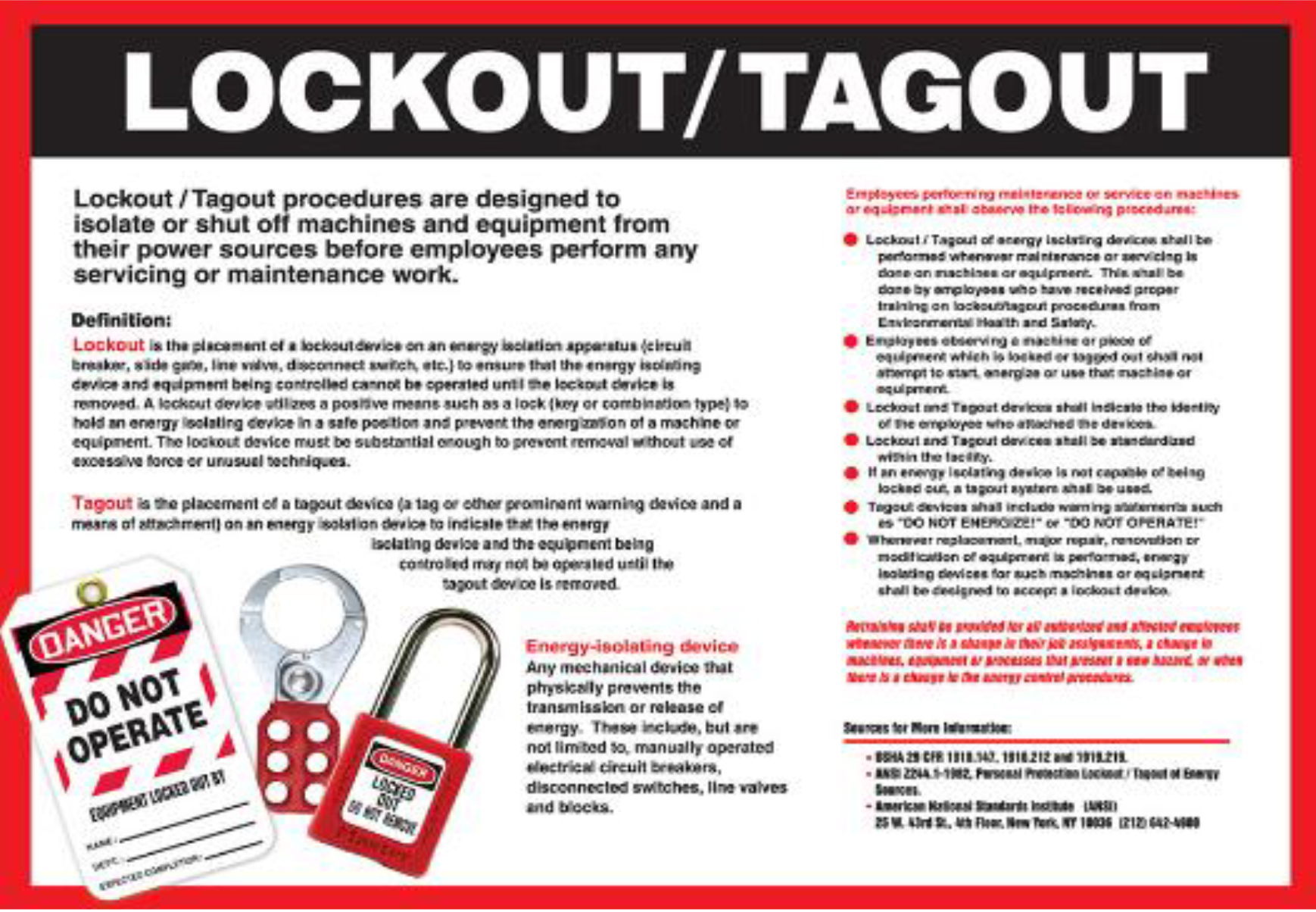
Case 2: Water Treatment Facility During a pump overhaul, a night-shift worker nearly powered up a locked-out motor. A large red “DO NOT ENERGIZE” sign on the breaker panel stopped them. Insight: The sign wasn’t just compliant—it was visible during shift changes, a high-risk period for miscommunication.
Case 3: Food Processing Plant Grease and steam degraded paper tags within hours. Equipment was released prematurely. Solution: Switched to 10-mil polyester tags with UV-resistant ink. Tags now last entire maintenance cycles.
Top 5 Lockout Tagout Signage Providers (Trusted by Industry Leaders)
Choosing the right supplier ensures durability, compliance, and clarity.
| Provider | Material Options | Key Strength | Best For |
|---|---|---|---|
| Seton | Vinyl, aluminum, polyester | OSHA-compliant templates, bulk customization | Large-scale manufacturing |
| Grainger | Plastic, metal, tagboards | Fast shipping, wide catalog | Facilities needing quick replacements |
| Justrite | Polycarbonate, laminated paper | High-visibility colors, bilingual options | Multilingual or outdoor sites |
| Brady Corporation | Thermal-transfer labels, smart tags | Integration with digital LOTO systems | Tech-forward or automated plants |
| SafetySign.com | Custom shapes, magnetic backings | Design flexibility, ADA-compliant fonts | Unique or non-standard equipment |
Each offers pre-designed kits or custom solutions. Brady, for example, provides scannable QR tags that link to digital lockout procedures—ideal for paperless workflows.
Integrating Signage Into Your LOTO Program
Signs don’t work in isolation. They must be embedded in a broader safety ecosystem.
Step 1: Audit Your Equipment Identify every machine with hazardous energy (electrical, hydraulic, pneumatic, thermal). Map energy isolation points.
Step 2: Install Permanent Signage Place warning and instructional signs at each isolation point. Use standardized messaging.
Step 3: Train Employees Teach workers to recognize, respect, and report issues with signage. Include real photos of correct vs. incorrect setups.
Step 4: Inspect Monthly Check for faded text, missing signs, or tampering. Replace instantly.
Step 5: Update During Changes New equipment? Modified process? New signs must follow.
The Cost of Skipping Signage: More Than Just Fines
OSHA fines for LOTO violations average $15,000 per incident. But the real cost is human: lost time, trauma, and eroded trust.
One refinery avoided a $120,000 fine after an audit because their signage was clear, current, and universally understood. The auditor noted: “Even a first-day worker could follow this system.”
That’s the power of well-designed signage—it doesn’t just comply. It protects.
Act Now: Strengthen Your LOTO Signage in 3 Steps
- Walk your floor—find blind spots where signs are missing or unreadable.
- Standardize your templates—use OSHA-aligned text, colors, and symbols.
- Train and reinforce—make signage literacy part of onboarding and refresher training.
Lockout tagout signage isn’t an afterthought. It’s a frontline defense. When the power is off and the lock is on, the sign is the voice that says: Stop. Look. Stay safe.
Frequently Asked Questions
What should lockout tagout signage include? At minimum: warning text (e.g., “Do Not Operate”), reason for lockout, authorized employee name, and date. Bilingual text is recommended for diverse teams.
Are digital signs compliant with OSHA? Yes, if they are visible, durable, and cannot be easily altered. Digital displays must remain active during maintenance and be backed by physical tags if needed.
Can I make my own LOTO signs? You can, but they must meet ANSI Z535.4 and OSHA standards for color, wording, and durability. Pre-made signs reduce risk of non-compliance.
Where should LOTO signs be placed? Directly on or adjacent to energy isolation points—disconnect switches, circuit breakers, valves—and on group lockout stations.
How often should LOTO signs be replaced? Inspect monthly. Replace immediately if faded, damaged, or illegible. Outdoor or high-exposure areas may need replacement every 6–12 months.
Do temporary signs count for OSHA compliance? Only if they meet durability and clarity standards. Handwritten paper tags are generally not compliant unless used as a last resort and replaced promptly.
Is bilingual LOTO signage required? Not by federal law, but strongly recommended. OSHA expects warnings to be understood by all employees—if a worker doesn’t read English, the sign must still communicate the hazard.
FAQ
What should you look for in Lockout Tagout Signage: The Silent Guardian of Workplace Safety? Focus on relevance, practical value, and how well the solution matches real user intent.
Is Lockout Tagout Signage: The Silent Guardian of Workplace Safety suitable for beginners? That depends on the workflow, but a clear step-by-step approach usually makes it easier to start.
How do you compare options around Lockout Tagout Signage: The Silent Guardian of Workplace Safety? Compare features, trust signals, limitations, pricing, and ease of implementation.
What mistakes should you avoid? Avoid generic choices, weak validation, and decisions based only on marketing claims.
What is the next best step? Shortlist the most relevant options, validate them quickly, and refine from real-world results.