When machinery unexpectedly powers on during servicing, the consequences are often catastrophic. Workers risk severe injury—or worse—simply because proper energy isolation wasn’t followed. A lockout tagout procedure checklist isn’t just a formality; it’s the critical line between routine maintenance and life-altering accidents.
Across manufacturing, utilities, and industrial environments, energy control processes fail most often not from lack of knowledge, but from inconsistent execution. A checklist turns policy into practice. It standardizes each step, eliminates guesswork, and ensures no phase of the lockout tagout (LOTO) process is skipped—even under time pressure.
This guide delivers a comprehensive, real-world lockout tagout procedure checklist, complete with workflow considerations, common pitfalls, and actionable examples to help organizations implement LOTO with precision.
Why a Lockout Tagout Procedure Checklist Is Non-Negotiable
Equipment maintenance carries inherent risks—rotating parts, pressurized systems, stored energy. Without verified isolation, workers are exposed to electrocution, crushing, or amputation hazards. According to OSHA, nearly 10% of serious accidents in industrial settings stem from uncontrolled energy release during servicing.
A checklist is the antidote to procedural drift. It acts as both a training aid and an audit trail. Supervisors use it to verify compliance, while technicians rely on it to perform every required step—regardless of experience level.
Real-world example: At a Midwestern food processing plant, a technician bypassed a lockout step to save 10 minutes during a conveyor belt repair. The motor activated automatically during cleaning mode. The result: a fractured arm and a $180,000 OSHA fine. The root cause? No enforced checklist, no secondary verification.
Checklists prevent overconfidence from becoming a liability.
Core Elements of a Lockout Tagout Procedure Checklist
An effective LOTO checklist isn’t a vague list of “turn off machine.” It’s a step-by-step protocol, tailored to specific equipment. Below are the essential components every checklist must include.
#### 1. Preparation: Identify Energy Sources Before any shutdown, workers must identify all energy sources powering the equipment: - Electrical - Hydraulic - Pneumatic - Thermal - Chemical - Gravitational (e.g., suspended loads)
Example: A CNC machining center may require disconnecting main power, releasing hydraulic pressure, and securing moving tool arms.
Failure to recognize stored energy—like a pressurized air line—is one of the most frequent causes of LOTO failure.
#### 2. Notification: Alert Affected Personnel Workers in the area must be informed that maintenance is beginning. This prevents accidental restarts and ensures awareness.
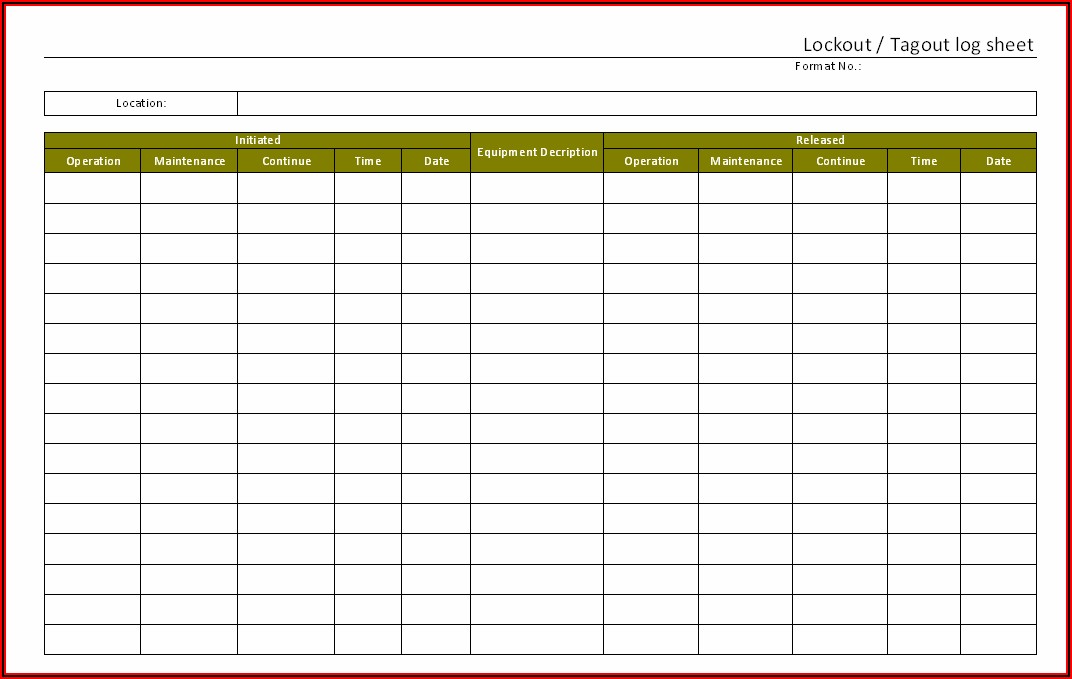
Best practice: Use a logbook or digital notification system. At facilities with shift overlaps, handover notes should reference active LOTOs.
#### 3. Machine Shutdown Using Normal Controls Shut down the equipment using standard operational procedures—never emergency stops, as they may not fully isolate energy.
Mistake to avoid: Assuming shutdown equals de-energized. Many systems retain power in control circuits even after being turned “off.”
#### 4. Isolation of Energy Sources Physically disconnect each energy source: - Flip circuit breakers (and padlock) - Close and lock valves - Block or bleed pressure lines - Insert safety pins or blocks
Each isolation point must be uniquely identifiable and accessible only to authorized personnel.
#### 5. Application of Locks and Tags Apply individual locks and tags to every energy-isolating device. Each lock must be personal—no group locks without a documented exception process.
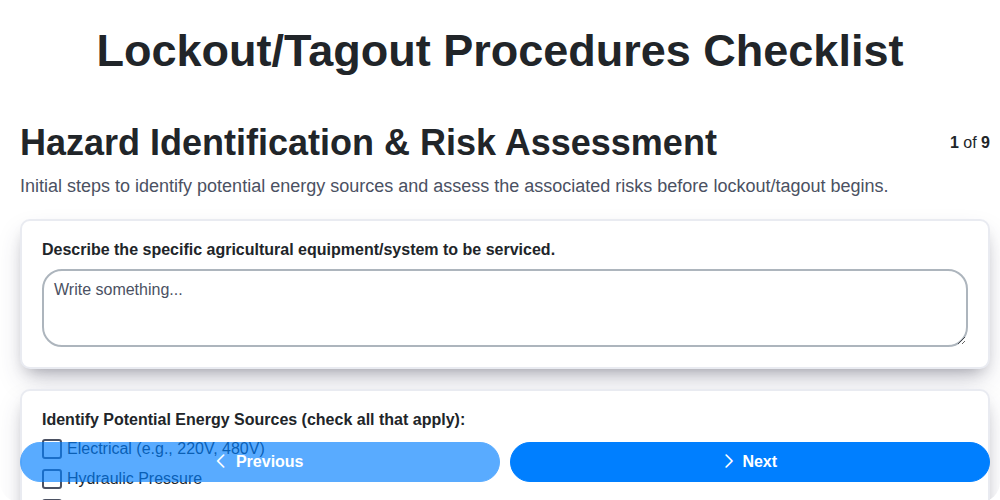
Tags must include: - Name of authorized employee - Date and time - Reason for lockout - Contact information
Critical rule: Tags alone are not sufficient. OSHA requires physical lockout unless tagout is part of an approved alternative procedure.
#### 6. Release of Stored Energy Verify all residual energy is dissipated: - Bleed hydraulic lines - Ground capacitors - Lower elevated parts - Allow cooldown of hot components
Use a voltmeter or pressure gauge to confirm. Never assume.
#### 7. Verification of Isolation Attempt to restart the machine using normal controls—only after ensuring no one is near it. This confirms zero energy.
If the machine operates even slightly, the process failed. Return to isolation steps.
This is the most overlooked yet most vital step in the checklist.
#### 8. Maintenance or Service Work Only now can repairs proceed. All tools, body parts, and materials must be clear before re-energizing.
#### 9. Removal of Lockout Devices After work completion: - Ensure all tools removed - Confirm all employees are clear - Verify equipment is safe to operate - Only the original lock owner removes their lock
Never remove another person’s lock—even if they’ve left for the day—without formal authorization and verification.
Developing Equipment-Specific Checklists
Generic LOTO checklists fail because they ignore equipment variability. A forklift’s isolation steps differ drastically from a boiler system.
Best approach: Create individualized checklists for each machine or system.
- Steps to build one:
- Conduct an energy source audit for the equipment
- Map every disconnect point (electrical disconnects, valve locations, etc.)
- Include photos or diagrams showing lock locations
- Assign it a unique ID and store centrally (digital or posted near machine)
- Review annually or after modifications
Example: A printing press checklist includes steps to lock out main drive motors, release tension on rollers, and block ink delivery pumps. Without this specificity, a technician might miss a secondary power feed.
Automated systems with programmable logic controllers (PLCs) add complexity. Ensure software locks are paired with physical isolation, as code-based safety can fail.
Common Mistakes That Undermine LOTO Checklists
Even with a checklist, failures occur due to human factors and process gaps.
Mistake 1: Using One Lock for Multiple Points A technician applies one lock to a circuit breaker but skips the hydraulic valve. This violates the “one lock, one hazard” principle.
Mistake 2: Skipping Stored Energy Release Assuming a disconnected motor means zero risk. But capacitors can hold charge for hours. Always test before touch.
Mistake 3: Incomplete Verification Not attempting to restart the machine after isolation. This skips the only real test of effectiveness.
Mistake 4: Tag Sharing or Lock Sharing Using duplicate keys or allowing “team locks” without strict controls. Each lock must be individually owned.
Mistake 5: Poor Checklist Accessibility Posting the LOTO procedure in a binder in the office instead of at the machine. Workers need instant access.
Solution: Laminate checklists and mount them near isolation points. Digital tablets with offline access also work in high-tech environments.
Integrating the Checklist into Safety Workflows
A checklist is only effective if it’s embedded in daily operations.
Training: New hires must complete hands-on LOTO drills using real checklists. Annual refreshers should include scenario-based testing—e.g., “Isolate this pump for valve replacement.”
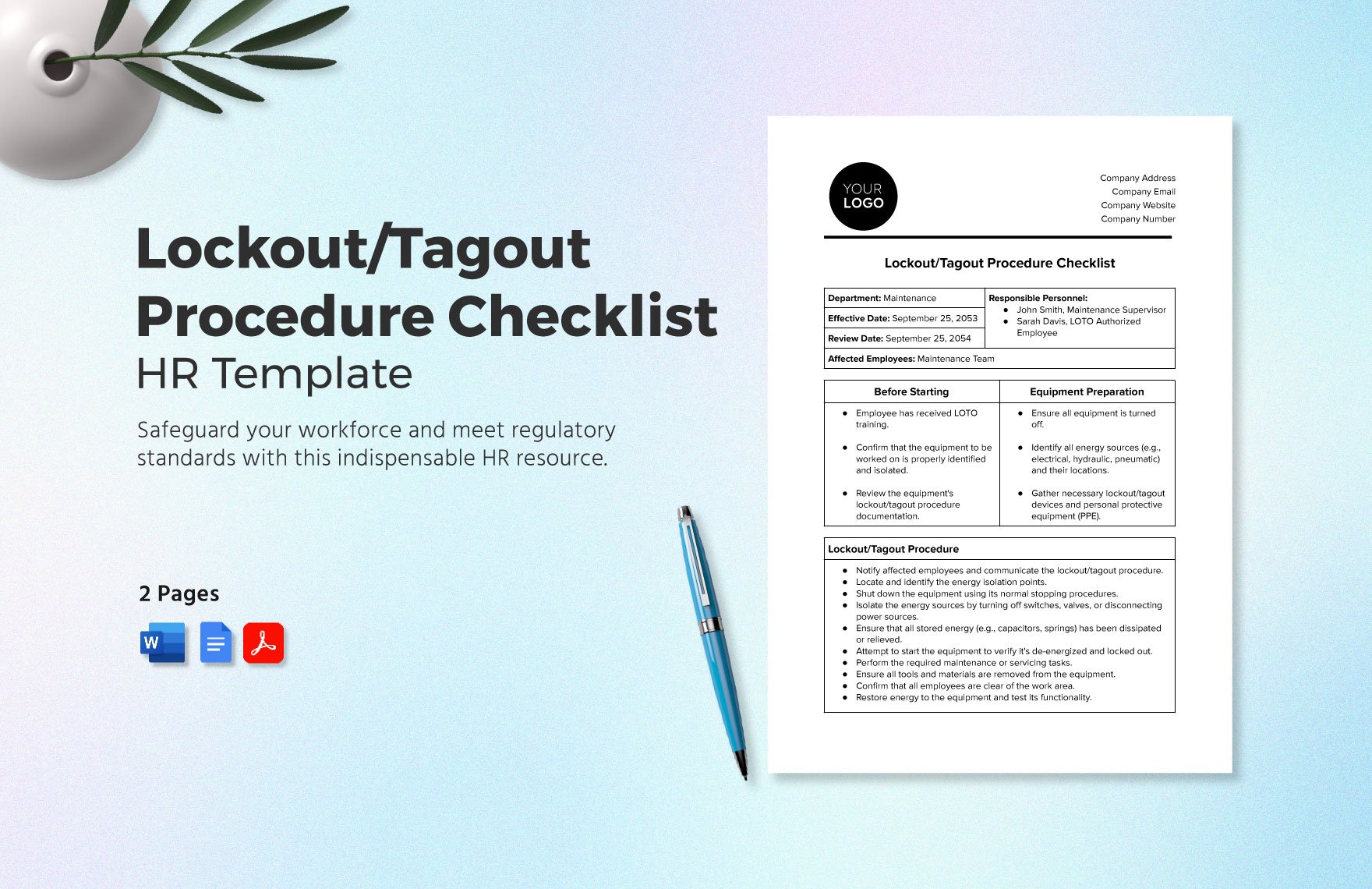
Audits: Supervisors should conduct monthly spot checks using the same checklist. Randomly observe a lockout and score compliance.
Digital Tools: Some plants use mobile LOTO apps that guide technicians step-by-step, log completion times, and sync with maintenance records. These reduce human error and improve accountability.
Shift Transitions: If maintenance spans shifts, outgoing workers must brief incoming staff, and new locks applied. The checklist should include a handover section with signatures.
Sample Lockout Tagout Procedure Checklist Template
Below is a generalized template adaptable to most machinery. Customize it per equipment type.
Equipment ID: [e.g., Pump-21A] Location: [e.g., North Processing Line] Prepared by: [Name, Date]
| Step | Action | Completed (Y/N) | Initials | Time |
|---|---|---|---|---|
| 1 | Notify affected employees | |||
| 2 | Shut down using normal controls | |||
| 3 | Isolate electrical source (breaker #7) | |||
| 4 | Isolate hydraulic supply (valve #3) | |||
| 5 | Lock out and tag all isolation points | |||
| 6 | Release stored energy (bleed lines, ground circuits) | |||
| 7 | Verify isolation (attempt restart) | |||
| 8 | Perform maintenance | |||
| 9 | Clear area, remove tools | |||
| 10 | Authorized worker removes lock(s) |
Note: All locks must be removed by the individual who applied them, unless under a formal group LOTO protocol.
Training and Compliance: Making the Checklist Stick
A checklist is only as strong as the culture enforcing it. OSHA’s 29 CFR 1910.147 mandates documented procedures, employee training, and periodic inspections.
Key compliance tips: - Train authorized employees (who perform LOTO) and affected employees (who operate equipment) separately - Document every training session with sign-offs - Inspect each LOTO procedure at least annually, with a written report - Use checklists during audits to assess real-world adherence
Penalties for non-compliance can exceed $150,000 per violation. But more importantly, the human cost of failure is irreversible.
Facilities that treat LOTO as a routine—like wearing PPE—see incident rates drop by over 70%. The checklist isn’t paperwork. It’s a ritual of safety.
Final Thoughts: Turn Compliance into Culture
A lockout tagout procedure checklist should never gather dust in a manual. It must be visible, practiced, and respected.
Start by auditing your top five high-risk machines. Build customized checklists. Train teams using real scenarios. Audit monthly. Iterate.
When every technician reaches for the checklist before touching a valve or breaker, you’ve moved beyond compliance—you’ve built a culture where safety is automatic.
Now, go lock it out. Tag it. Verify it. Every. Single. Time.
Frequently Asked Questions
What is the first step in a lockout tagout procedure? The first step is preparing for shutdown by identifying all energy sources and notifying affected employees.
Can tags be used without locks? No. Tags alone are not acceptable under OSHA unless part of a documented tagout-only program with additional protective measures.
Who can remove a lockout device? Only the authorized employee who applied the lock may remove it, unless under a formal group lockout protocol with supervisory oversight.
How often should LOTO procedures be inspected? OSHA requires each energy control procedure to be inspected at least annually.
Do LOTO checklists need to be machine-specific? Yes. Each piece of equipment has unique energy sources and isolation points, requiring a tailored checklist.
What qualifies as an “authorized employee” for LOTO? An authorized employee has been trained to implement the energy control program and perform servicing on machines.
Is verification of isolation really necessary? Absolutely. Attempting to restart the machine after lockout is the only way to confirm all energy sources are isolated.
FAQ
What should you look for in Lockout Tagout Procedure Checklist: A Complete Guide? Focus on relevance, practical value, and how well the solution matches real user intent.
Is Lockout Tagout Procedure Checklist: A Complete Guide suitable for beginners? That depends on the workflow, but a clear step-by-step approach usually makes it easier to start.
How do you compare options around Lockout Tagout Procedure Checklist: A Complete Guide? Compare features, trust signals, limitations, pricing, and ease of implementation.
What mistakes should you avoid? Avoid generic choices, weak validation, and decisions based only on marketing claims.
What is the next best step? Shortlist the most relevant options, validate them quickly, and refine from real-world results.